How Many Calories Are in Cheese Pizza? Full Nutrition Guide
If you’re wondering how many calories cheese pizza has, the quick answer is that one average slice of cheese pizza contains around 250 to 400 calories, depending on the size, crust type, cheese amount, and brand.
Thin-crust slices are usually lower in calories, while deep-dish or stuffed-crust cheese pizza can be much higher. A whole cheese pizza can range anywhere from 1,200 to over 3,000 calories based on diameter and ingredients.
Cheese pizza is one of the most popular comfort foods in the world, but calorie counts can vary more than most people realize. A single slice from a local pizzeria may have a completely different nutrition profile than a frozen pizza or a slice from Domino’s or Pizza Hut.
That’s why knowing the real numbers can help whether you’re counting calories, trying to lose weight, tracking macros, or simply making smarter food choices.
In this guide, you’ll learn exactly how many calories are in cheese pizza by slice size, crust type, pizza diameter, restaurant brand, and homemade recipes. We’ll also cover nutrition facts, healthier options, and tips to enjoy cheese pizza without overdoing the calories.
Why Calorie Differs in Cheese Pizza?
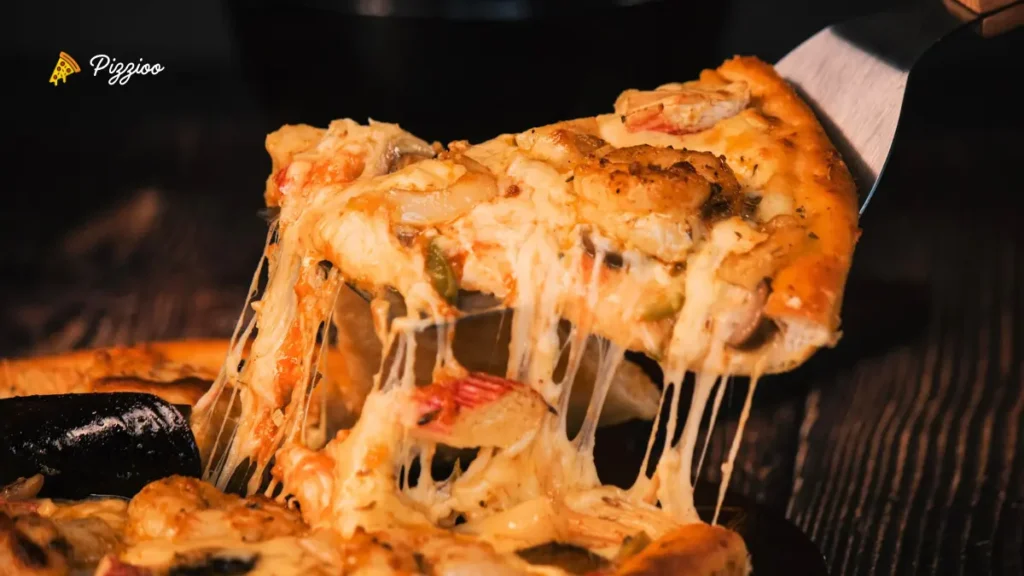
Cheese pizza may look simple, but the calorie count can change a lot from one slice to another. Two slices of cheese pizza can have very different calories depending on how they are made, how large they are, and what ingredients are used.
That is why some slices contain around 250 calories, while others can easily go over 400 calories.
Understanding these factors helps you estimate calories more accurately and choose the best option for your diet goals.
- Crust Thickness – Thin crust cheese pizza usually has fewer calories because it uses less dough. Thick crust, pan pizza, and deep-dish styles contain more bread and therefore more calories.
- Slice Size – A small slice naturally has fewer calories than a large New York-style slice. Bigger slices mean more crust, sauce, and cheese.
- Amount of Cheese – Extra cheese adds significant calories because cheese contains fat and protein. Light cheese versions are usually lower in calories.
- Pizza Diameter – A 16-inch pizza has more total calories than a 10-inch pizza because it uses more dough and toppings. Larger pizzas also often have larger slices.
- Type of Cheese Used – Mozzarella is common, but blends with cheddar, provolone, or whole-milk cheese can increase calorie content.
- Oil and Butter Added – Some pizzas use oil in the dough, brushed butter on the crust, or extra grease during cooking, which increases calories.
- Brand or Restaurant Recipe – Domino’s, Pizza Hut, frozen pizzas, and local pizzerias all use different recipes, portion sizes, and cheese amounts, so calories vary widely.
- Homemade vs Store-Bought – Homemade cheese pizza gives you more control over dough, cheese, and portion size, which can lower or raise calories depending on ingredients used.
Cheese Pizza Calories by Size Type
Cheese pizza calories often depend on the overall pizza size because larger pizzas usually have bigger slices, more dough, and more cheese. While the exact number varies by brand and crust style, small pizzas are generally the lightest option, while large pizzas contain the highest total calories.
The table below shows average cheese pizza calorie estimates by common size types.
| Pizza Size | Typical Diameter | Calories Per Slice | Slices Per Pizza | Total Calories Per Pizza |
|---|---|---|---|---|
| Small | 8–10 inches | 180–280 calories | 4–6 slices | 800–1,500 calories |
| Medium | 12 inches | 220–350 calories | 6–8 slices | 1,400–2,400 calories |
| Large | 14–16 inches | 250–400 calories | 8–12 slices | 2,000–3,600 calories |
| Extra Large | 16–18+ inches | 300–450 calories | 10–12 slices | 2,800–4,500 calories |
Cheese Pizza Calories by Crust Type
The crust type is one of the biggest reasons cheese pizza calories can vary so much. Even when the toppings stay the same, a thin crust pizza usually has fewer calories because it uses less dough, while thicker crusts add more carbs and total calories. Styles like pan, deep-dish, and stuffed crust are typically the highest in calories due to extra bread, oil, or added cheese.
The table below shows average calorie estimates by crust type for one standard slice of cheese pizza.
| Crust Type | Average Calories Per Slice | Why Calories Differ |
|---|---|---|
| Thin Crust | 180–280 calories | Less dough and lighter base |
| Regular Crust | 250–350 calories | Balanced dough thickness and common serving size |
| Hand Tossed Crust | 260–360 calories | Slightly thicker and softer texture |
| Pan Crust | 300–420 calories | Thicker dough with added oil during baking |
| Deep Dish | 350–500 calories | Heavy crust with extra layers and dense filling |
| Stuffed Crust | 320–480 calories | Extra cheese baked inside the crust edge |
| Cauliflower Crust | 150–280 calories | Often lower carb, but depends on cheese and ingredients |
Cheese Pizza Calories by Pizza Size
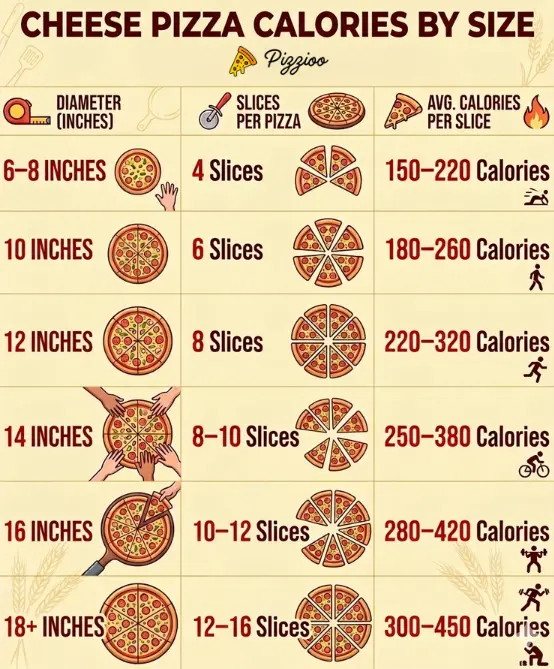
Cheese pizza calories also change based on the pizza’s diameter. A larger pizza uses more dough, sauce, and cheese, which increases the total calorie count. Even if slice counts are similar, bigger pizzas often have wider slices with more calories per piece.
The table below shows average calorie estimates for whole cheese pizzas by common pizza sizes.
| Pizza Size | Diameter | Typical Slices | Average Calories Per Slice | Total Calories Per Pizza |
|---|---|---|---|---|
| Personal | 6–8 inches | 4 slices | 150–220 calories | 600–900 calories |
| Small | 10 inches | 6 slices | 180–260 calories | 1,000–1,500 calories |
| Medium | 12 inches | 8 slices | 220–320 calories | 1,700–2,500 calories |
| Large | 14 inches | 8–10 slices | 250–380 calories | 2,200–3,400 calories |
| Extra Large | 16 inches | 10–12 slices | 280–420 calories | 3,000–4,500 calories |
| Party Size | 18+ inches | 12–16 slices | 300–450 calories | 4,000–6,000+ calories |
Cheese Pizza Calories by Number of Slices
How many slices you eat is often more important than the pizza size itself. A single slice of cheese pizza can fit into many meal plans, but eating multiple slices quickly increases total calories.
Since slice sizes vary by restaurant and crust type, the numbers below use average regular-crust cheese pizza estimates to help you calculate your portion more easily.
| Number of Slices | Average Calories | Best For |
|---|---|---|
| 1 Slice | 250–350 calories | Light snack or small meal |
| 2 Slices | 500–700 calories | Standard meal portion |
| 3 Slices | 750–1,050 calories | Large meal or high appetite |
| 4 Slices | 1,000–1,400 calories | Heavy meal |
| 5 Slices | 1,250–1,750 calories | Sharing or high-calorie intake |
| 6 Slices | 1,500–2,100 calories | Half to most of a pizza |
| 8 Slices | 2,000–2,800 calories | Full medium or large pizza |
Cheese Pizza Calories by Popular Brands
Popular pizza brands can have very different calorie counts even when you order a basic cheese pizza. The biggest reasons are slice size, crust thickness, cheese amount, and each company’s recipe. Some chains use thicker dough or more cheese, while others offer lighter thin-crust options.
The table below shows average calories for one standard slice of cheese pizza from well-known brands.
| Pizza Brand | Serving Size | Average Calories Per Slice | Notes |
|---|---|---|---|
| Domino’s | 1 slice (Large Hand Tossed) | 290 calories | Regular hand-tossed crust option |
| Pizza Hut | 1 slice (Medium Hand Tossed est.) | 220–260 calories | Pan crust is usually higher |
| Papa John’s | 1 slice (Large Original Crust) | 290 calories | Similar to Domino’s large slice |
| Little Caesars | 1 slice (Classic Cheese) | 240–244 calories | Standard round cheese pizza |
| Costco Food Court | 1 large slice | 699–710 calories | Oversized slice with heavy cheese |
| Frozen Store Brand | 1 slice | 220–350 calories | Depends on brand and crust |
Homemade Cheese Pizza Calories
Homemade cheese pizza calories can vary widely because you control every ingredient, from the dough and sauce to the amount of cheese and oil used. This makes homemade pizza a great option for people who want healthier portions or specific nutrition goals.
A lighter homemade pizza can be much lower in calories than restaurant pizza, while extra cheese or thick crust versions can be just as high.
The table below shows average calorie estimates for one slice of homemade cheese pizza.
| Homemade Pizza Type | Serving Size | Average Calories Per Slice | Why It Varies |
|---|---|---|---|
| Thin Crust Homemade | 1 slice | 180–260 calories | Less dough and lighter base |
| Regular Crust Homemade | 1 slice | 220–320 calories | Balanced crust and standard cheese |
| Thick Crust Homemade | 1 slice | 280–400 calories | More dough increases calories |
| Whole Wheat Crust | 1 slice | 200–300 calories | Similar calories, more fiber |
| Cauliflower Crust | 1 slice | 150–280 calories | Lower carb depending on recipe |
| Extra Cheese Homemade | 1 slice | 300–450 calories | Added cheese raises fat and calories |
| Mini Personal Pizza | Whole pizza | 500–900 calories | Depends on size and toppings |
Cheese Pizza Nutrition Facts
Cheese pizza is often seen as indulgent, but it also contains a mix of key nutrients like carbohydrates, protein, and fat. The exact nutrition profile depends on the crust, cheese amount, and serving size, but a standard slice of cheese pizza provides energy along with some essential nutrients.
The table below shows the average nutrition breakdown for one typical slice of regular cheese pizza.
| Nutrient | Average Amount Per Slice | What It Means |
|---|---|---|
| Calories | 250–350 kcal | Main energy source from carbs, fat, and protein |
| Carbohydrates | 30–40 g | Mostly from pizza dough (refined flour) |
| Protein | 10–15 g | Mainly from cheese and small amount from dough |
| Fat | 10–15 g | Comes from cheese, oil, and crust |
| Saturated Fat | 4–7 g | Mainly from cheese and dairy fats |
| Sodium | 500–900 mg | High due to cheese, sauce, and seasoning |
| Fiber | 1–3 g | Low unless whole wheat or veggie crust is used |
| Calcium | 15–25% DV | From cheese (good for bones and teeth) |
Is Cheese Pizza Healthy?
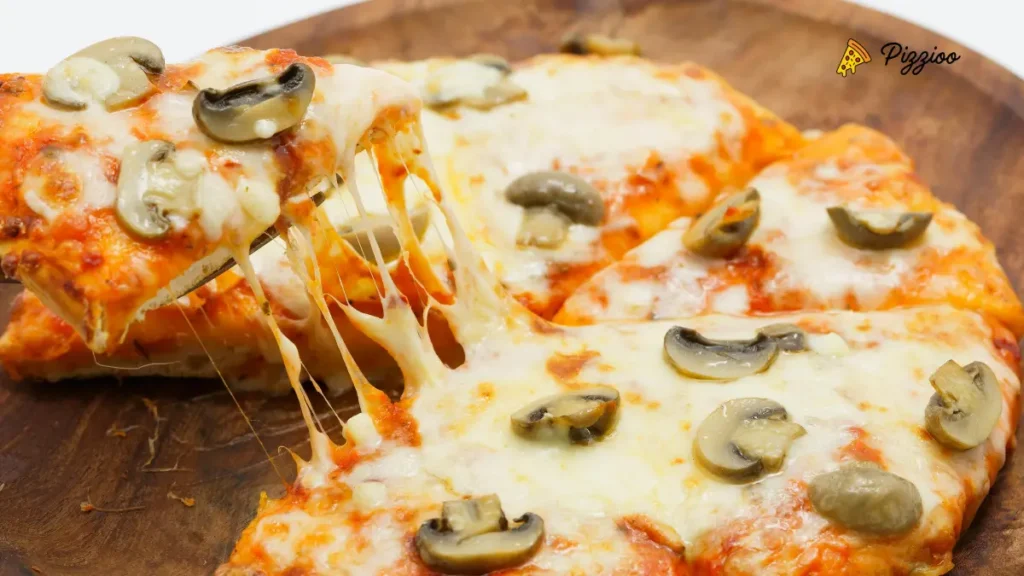
Cheese pizza can be both healthy and unhealthy depending on how much you eat and how it’s prepared. On the positive side, it provides important nutrients like protein from cheese, calcium for bone health, and energy from carbohydrates, making it a satisfying meal that can keep you full for a while.
When made with quality ingredients and eaten in moderation, a couple of slices can fit into a balanced diet without any major issues.
However, cheese pizza can become less healthy when portion sizes get too large or when it’s made with thick crust, extra cheese, and high-sodium processed ingredients.
In those cases, the calorie count, saturated fat, and sodium levels can add up quickly, which may contribute to weight gain or other health concerns if eaten frequently.
The healthiest approach is to control portion size, choose thinner crust options, and balance your meal with vegetables or a side salad to improve overall nutrition.
How to Reduce Calories in Cheese Pizza?
If you love cheese pizza but want to cut down on calories, the good news is you don’t have to give it up completely. Small changes in ingredients, portion size, and preparation method can significantly reduce the total calorie intake while still keeping the taste enjoyable. Here are some practical ways to make cheese pizza lighter and more diet-friendly:
- Choose Thin Crust Instead of Thick Crust: Thin crust uses less dough, which immediately reduces carbs and overall calories compared to pan, stuffed, or deep-dish styles.
- Go Easy on the Cheese: Asking for light cheese or using a smaller amount at home can reduce fat and calorie content without removing the flavor completely.
- Control Your Portion Size: Eating 1–2 slices instead of half or a full pizza is one of the simplest ways to manage calorie intake.
- Add More Vegetables: Toppings like onions, peppers, mushrooms, and spinach add volume and nutrients with very few extra calories.
- Avoid Extra Oils and Butter on the Crust: Some pizzas are brushed with oil or butter, which increases calories without adding much nutritional value.
- Choose Smaller Pizza Sizes: Ordering a personal or small pizza helps naturally limit total calorie consumption.
- Make It at Home: Homemade pizza gives you full control over ingredients, allowing you to use lighter cheese, whole wheat crust, or healthier alternatives.
- Pair with a Healthy Side: Eating pizza with a salad or protein-rich side can help you feel full faster and reduce the need for extra slices.