
Pizza style
Sets hydration, weight & fermentationNumber of pizzas
How many dough balls to makeUnit
Display measurements inWhat Is Pizza Dough?
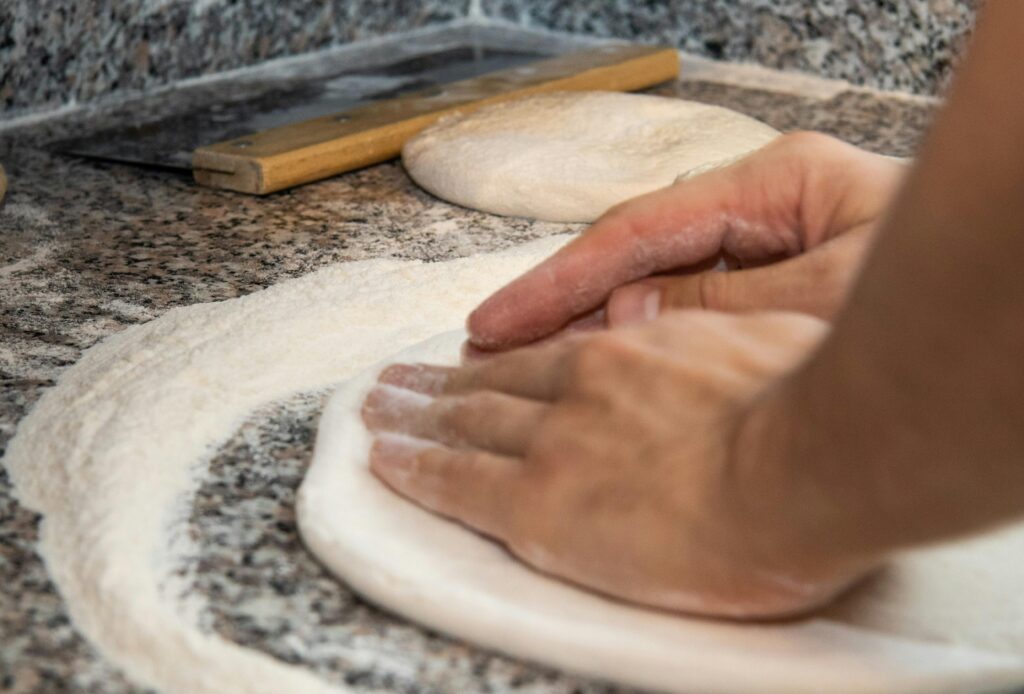
Pizza dough is a mixture of basic ingredients such as flour, water, yeast, and salt that is used to create the base of a pizza. It is typically kneaded into a soft, elastic consistency and then left to rest so the yeast can ferment, allowing the dough to rise and develop a light, airy texture.
This dough serves as the foundation of a pizza, providing structure and support for toppings like sauce, cheese, and vegetables or meat. When baked, pizza dough transforms into a crust that can be soft, chewy, or crispy depending on the preparation method and thickness.
How Does the Pizza Dough Calculator Work?
The pizza dough calculator is designed to simplify the process of making perfect pizza dough by turning a few basic inputs into precise, ready-to-use measurements. Instead of manually calculating ratios or adjusting recipes, the tool uses proven baking percentages and style-based formulas to give you consistent, accurate results every time.
Inputs (What You Select)
- Pizza Style: Choose from Neapolitan, New York, Roman, or Detroit. Each style applies different dough properties like hydration, oil content, and fermentation time.
- Number of Pizzas: Use the +/− stepper to set how many pizzas you want to make. The calculator automatically scales all ingredients accordingly.
- Unit (Grams or Ounces): Select your preferred measurement unit for easy and practical use in your kitchen.
Outputs (What You Get)
- Flour (Base Ingredient): The foundation of the recipe. All other ingredients are calculated based on flour weight using baker’s percentages.
- Dough Ball Weight: The ideal weight for each pizza dough ball, helping you portion evenly.
- Water / Hydration Level: Displays the exact water amount along with hydration percentage. This controls texture—higher hydration makes dough softer and airier, while lower hydration makes it firmer and crispier.
- Salt: Precisely measured to enhance flavor without affecting fermentation balance.
- Olive Oil: Added based on style to improve texture, richness, and crust softness.
- Yeast: Carefully calculated yeast amount to ensure proper rising and fermentation timing.
- Fermentation Time: A recommended resting period based on your selected style, helping develop flavor and structure.
- Total Dough Weight + Hydration Tip: Shows the full dough weight and provides a practical tip to help you handle and adjust the dough if needed.
Pizza Style Comparison Table
| Style | Hydration % | Texture | Bake Temp | Fermentation |
|---|---|---|---|---|
| Neapolitan | 55–65% | Soft, airy | Very high | 8–24 hrs |
| New York | 60–65% | Chewy, foldable | High | 24–72 hrs |
| Roman | 65–80% | Light, crispy | Medium | 24–72 hrs |
| Detroit | 65–75% | Thick, fluffy | Medium | 12–48 hrs |
Hydration Impact Table
| Hydration % | Dough Feel | Final Crust Result |
|---|---|---|
| 50–55% | Firm, easy | Dense, crispy |
| 60–65% | Balanced | Chewy, classic pizza |
| 70%+ | Sticky, soft | Airy, open crumb |
Ingredient Role Table
| Ingredient | Purpose |
|---|---|
| Flour | Structure and base of dough |
| Water | Controls hydration and texture |
| Salt | Enhances flavor and controls yeast |
| Yeast | Helps dough rise |
| Olive Oil | Adds softness and richness |
Dough Ball Size & Weight Table
| Pizza Size | Dough Ball Weight |
|---|---|
| 8 inch | 180–220g |
| 10 inch | 220–280g |
| 12 inch | 250–320g |
| 14 inch | 350–450g |
How accurate is the pizza dough calculator?
The calculator uses standard baker’s percentages and style-based formulas to ensure high accuracy. As long as you measure ingredients correctly, the results will be reliable and consistent. It’s designed to match real-world pizza-making practices used by professionals.
Can I use this calculator for any pizza style?
The tool currently supports Neapolitan, New York, Roman, and Detroit styles. Each has its own dough behavior, so the calculator adjusts ingredients accordingly. For other styles, you may need manual tweaks.
What does hydration mean in pizza dough?
Hydration refers to the percentage of water compared to flour. It directly affects dough texture—higher hydration makes it softer and airier, while lower hydration results in a firmer, crispier crust. The calculator highlights this to help you understand the outcome.
Why is flour treated as the base ingredient?
In baking, all ingredients are calculated relative to flour weight using baker’s percentages. This method ensures perfect balance and easy scaling. That’s why the calculator uses flour to determine everything else.
Can I adjust the dough after calculation?
Yes, the results are a starting point. You can slightly adjust water or flour depending on your environment, such as humidity or temperature. The hydration tip included helps guide these small changes.
Does fermentation time really matter?
Yes, fermentation is key to flavor and texture. Longer fermentation develops better taste and improves dough structure. The calculator suggests timing based on the selected pizza style for best results.
Is this tool beginner-friendly?
Absolutely. The calculator simplifies complex calculations into easy-to-follow outputs. Even if you’re new to pizza making, you can confidently create well-balanced dough.
Can I switch between grams and ounces anytime?
Yes, you can select your preferred unit before calculating. This makes the tool flexible whether you use metric or imperial measurements in your kitchen.